Mitigating corrosion under insulation (CUI) can significantly prolong the service life of insulated piping systems, since it reduces the frequency of insulation replacement cycles. This translates into reduced material consumption, lower waste generation, and lower maintenance-related energy use over the facility’s lifecycle.
Environmental stewardship in industrial facilities often focuses on emissions and waste monitoring and management. Yet, hidden under layers of insulation, corrosion under insulation (CUI) represents a significant environmental risk.
Difficult to detect, as it progresses unseen under insulation systems, the consequences of CUI extend beyond equipment and process degradation, manifesting as fugitive emissions, unplanned environmental releases, and premature asset failures that can compromise personnel safety and environmental objectives.
When corrosion compromises the integrity of a pipe wall, even minor breaches can release process fluids that impact air quality, soil, and groundwater. In facilities handling hydrocarbons, chemicals, or other hazardous materials, these releases pose immediate environmental risks and potential regulatory consequences, leading to costly shutdowns.
Beyond direct releases, CUI leads to energy and process inefficiencies. Corrosion-induced heat loss, for example, increases energy consumption as facilities compensate for compromised thermal performance. This elevated energy demand translates directly into increased costs and environmental impact.
Unplanned downtime caused by CUI-related failures creates additional environmental burdens. Industry estimates suggest that CUI accounts for 40% to 60% of piping maintenance costs in petrochemical facilities, representing billions of dollars annually in repairs.
Each failure event incurs an environmental cost, including expedited material consumption and transport; increased waste from damaged insulation and piping; and elevated energy use during system restarts.
Maintaining Stable, Dry Conditions
The fundamental challenge lies in the three essential ingredients for corrosion: unprotected metal, oxygen, and water. Since metal and oxygen remain constant in industrial environments, moisture control becomes the critical variable. Insulation systems that maintain dry conditions at the pipe surface best mitigate CUI.
Temperature management also plays a role. CUI typically thrives within specific temperature ranges. For carbon-steel systems, the highest risk range is -4 °F to 350 °F (-20 °C to 175 °C), with thermal cycling worsening the risk. Insulation systems must maintain performance under these harsh conditions.
A well-thought-out insulation system, including the maintenance strategy, goes a long way in addressing CUI. The following key considerations deserve attention:
-
Proper jacketing design and installation represent the first line of defense against moisture intrusion. Industry best practices emphasize weather-tight, but not vapor-tight, jacketing systems.
-
Joint and penetration management requires particular attention. Fittings, flanges, hangers, valves, and other discontinuities in the insulation system create vulnerable points where moisture can enter.
-
Surface preparation and coating systems provide a secondary barrier when moisture does reach the pipe surface.
-
Inspection and monitoring protocols can help detect CUI before significant damage occurs. Risk-based inspection methodologies, following guidelines such as API RP 580, prioritize assets based on the consequence of failure and the likelihood of damage.
-
Advanced inspection technologies—including thermal imaging, fiber optic, and moisture detection—allow for condition assessments without complete insulation removal, thereby reducing inspection costs.
When it comes to plant design and operations, there are opportunities to eliminate unnecessary insulation where personnel protection cages can suffice, avoid water traps and horizontal surfaces that accumulate moisture, and ensure adequate clearance for inspection access.
When possible, reducing thermal cycling to maintain operating temperatures outside critical CUI ranges provides reduced susceptibility.
Next Generation of CUI Mitigation Technology
Even taking the aforementioned precautions, it is difficult to eliminate the risk of water ingress to insulation at complex industrial facilities. This is especially true for existing, older facilities, where changes to system and process design may not be possible or cost-efficient.
Here, insulation innovations are introducing new opportunities to mitigate CUI by actively modifying the corrosive environment at the pipe surface during corrosive events—such as water intrusion.
Among the most significant recent developments is the integration of corrosion inhibitors into mineral wool insulation. One example of this technology is the CR-Tech corrosion inhibitor from ROCKWOOL Technical Insulation (RTI), which is embedded into the inner surface of RTI’s ProRox PS 965 mandrel wound pipe insulation sections.
When water contacts the inhibitor, the active compounds migrate with the water to the pipe surface. Upon reaching the metal, these compounds react with iron to form a thin protective film, which prevents direct contact between corrosive fluids and the steel substrate.
Simultaneously, the inhibitors buffer the water’s pH, thereby reducing its acidity and lowering the risk of corrosion. These inhibitors thus provide a critical safety margin in a plant’s operational and environmental performance.

Extensive third-party testing has validated its performance in mitigating CUI across various scenarios encountered in industrial facilities. These results include:
-
Modified ASTM C1617 testing evaluated the performance of the CR-Tech inhibitor at chloride concentrations up to 600 ppm—well above typical rainwater exposure levels. Results demonstrated that insulation containing the inhibitor provided lower corrosion rates than even the control solution of deionized water, indicating active protection that goes beyond passive resistance.
-
Testing to modified ASTM C1617 protocols included heat aging at temperatures up to 1,200 °F (649 °C) for 24 h, simulating extreme thermal exposure. The inhibitor maintained consistent mass loss corrosion rates across this temperature range, demonstrating thermal durability.
-
Additional testing to modified ASTM G189 protocols subjected insulation samples to water throughput equivalent to 15 times the annual rainfall in Houston, Texas, USA, to represent an aggressive moisture exposure scenario.
Even under these extreme conditions, the inhibitor-treated insulation continued to provide corrosion protection.
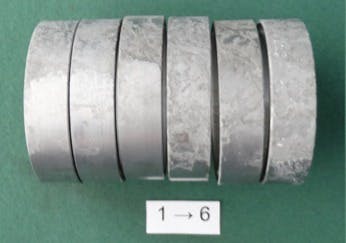
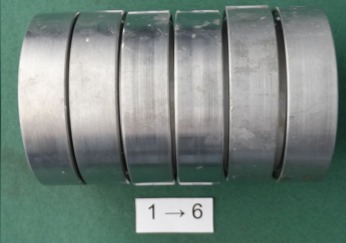
After 15 years of rain exposure and upon ASTM G189 testing, these images show a steel coupon specimen with (right) and without the corrosion inhibitor.
The CR-Tech inhibitor is complemented by RTI’s WR-Tech water-repellency technology, which reduces the amount of moisture that can migrate to the pipe surface. These hydrophobic treatments coat individual insulation fibers, which in turn promotes rapid water dissipation—even after prolonged exposure to moisture.
Open-cell mineral wool structures treated with this water-repellent additive are five times better at shedding water than untreated materials at elevated temperatures. This minimizes the duration of corrosive contact.
Performance Beyond Corrosion Mitigation
RTI’s ProRox PS 965 mineral wool insulation, which includes the CR-Tech inhibitor, provides additional benefits to plant efficiency beyond CUI mitigation.
The insulation properties of mineral wool improve thermal efficiency, thereby cutting energy losses and supporting lower fuel consumption. This results in reduced greenhouse gas emissions.
In addition, the material offers excellent sound-dampening properties. This helps safeguard workers and the surrounding environment from constant noise pollution, which is common in industrial facilities.
The ProRox insulation technologies include stone wool fibers, which are inherently sound-absorbent. Testing to ISO 15665 standards (acoustic insulation performance for pipes, valves, and flanges) shows ProRox insulation to be an excellent material for meeting Classes A to C, and even the newest Class D, requirements.
Some solutions require half the thickness recommended by the standard, which leads to more efficient, cost-effective installation.
Designed for practicality and produced in North America, ProRox mandrel-wound piping insulation arrives onsite in pre-split, hinged sections that can be fitted quickly and accurately. This streamlined installation process reduces downtime and labor expenses, while the mandrel-wound design helps lower handling, transport, and material costs.

Moving Toward Proactive CUI Mitigation
As industrial facilities face increasing pressure to improve environmental performance while maintaining operational reliability, the role of thermal insulation systems in corrosion prevention deserves greater recognition.
With the evolution toward active corrosion mitigation technologies, CUI represents a significant yet addressable source of environmental impact. Innovations such as integrated corrosion inhibitors and water repellency provide additional layers of protection that maintain effectiveness.
This effectiveness is maintained even when traditional moisture barriers, such as cladding or jacketing, become damaged. The benefits of such systems extend across:
-
Improved land, water, and air quality, protecting ecosystems from preventable releases;
-
Reduced energy consumption when compared to highly absorbent insulation;
-
Enhanced operational reliability to minimize both planned and unplanned maintenance.
Mitigating CUI also significantly prolongs the service life of insulated piping systems, since it reduces the frequency of insulation replacement cycles. This translates into reduced material consumption, lower waste generation, and lower maintenance-related energy use over the facility’s lifecycle.
When insulation systems can reliably perform for 20 to 30 years, the cumulative environmental benefit becomes substantial.
But however capable these innovations are in mitigating CUI, it is also essential to recognize that there is no cure-all. Effective CUI prevention requires viewing insulation not as a commodity, but as an engineered system that is integral to environmental stewardship.
Material selection, system design, installation quality, and maintenance protocols will collectively determine whether facilities can achieve environmental objectives while protecting critical assets.


